The Log, theTrees, and the People Who Build Bridges
By David Durrant
The most enduring bonds between nations are not forged in treaties alone, but in acts of friendship, goodwill, and mutual respect passed from one generation to the next. They are found in classrooms and hospitals, cultural exchanges and community service, and in the simple kindnesses that connect people across borders.These ties are nurtured not by institutions alone, but by ordinary citizens, educators, artists, volunteers, and workers. It is they who, often unseen and uncelebrated, quietly sustain the enduring bonds that hold humanity together. They are the custodians of civilization's better instincts,reminding us that while nations may be divided by geography, they are brought together by the enduring human capacity to care for one another.
The story of a giant Douglas fir and one million trees offer a reminder of that lesson. A story that begins more than a century ago, when Chinese immigrants arrived in Cumberland on Vancouver Island. They worked in the coal mines, built businesses, raised families, and established one of the largest Chinese communities in North America. Through perseverance and hard work, they helped build British Columbia's economy and communities. As a young boy, I helped tend the graves of some of these pioneers in Cumberland's historic Chinese cemetery. Years later, while serving as Chief Administrative Officer for Cumberland, I returned with children and volunteers to continue caring for those graves. The experience reinforced a simple truth: relationships survive because people choose to remember.
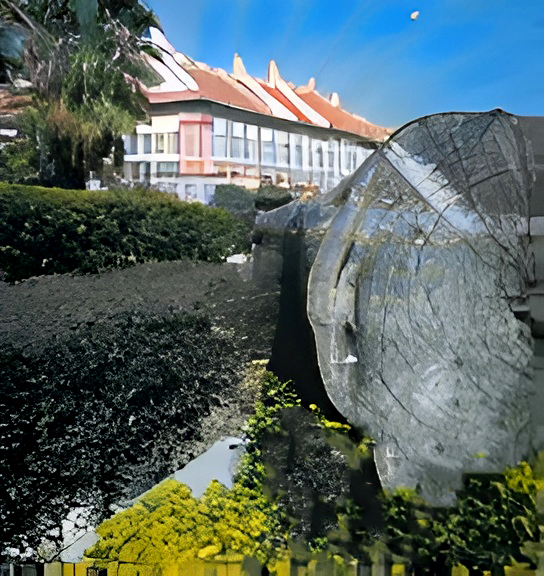
Working alongside Cumberland Mayors Fred Bates, Bronco Moncrief, and Leslie Baird, we sought to strengthen ties with Putian, our sister city in China's Fujian Province. Through lantern festivals, cultural exchanges, and professional visits involving physicians and healthcare workers, we created opportunities for people to learn from one another.These were not grand geopolitical initiatives. They were acts of human connection. Where history often turns on the willingness of ordinary people to extend a hand, build trust, and imagine a better future together. During that same period, I extended a hand to forestry company TimberWest. When they asked how they could give back to the community, I did not suggest a donation or a project for the moment. Instead, I proposed two gifts designed to outlive us, investments not simply in the present, but in the generations yet to come.The first was an extraordinary old-growth Douglas fir. Twenty-two metres long, one-and-a-half metres in diameter,and weighing more than 27 tonnes, the tree was entrusted to the people of Putian and transported across the Pacific Ocean in 2013.
Today, it rests in Huangshi Art Gallery Park. Its significance extends far beyond its size.An old-growth tree is more than timber. It is centuries ofhistory made visible. Within its rings are stories of storms survived, seasons endured, and generations passed. It represents patience, resilience, and continuity.The tree was not sent as a commodity. It was sent as a symbol of friendship between communities. A symbol of stewardship, and understanding that some things possess value beyond economics.The second gift was even more ambitious. In Chinese culture, planting a tree symbolizes hope, prosperity, renewal, and a commitment to future generations. A tree is often seen as a living legacy, an act of stewardship that expresses respect for the past while investing in the well-being of those who will come after us.TimberWest agreed to plant one million trees, one for everychild in Putian. At one level, the initiative supported environmental restoration. At another, it represented something deeper: faith in the future.
Every tree became a promise that today's decisions matter to generations not yet born. Every seedling acknowledged that our responsibilities extend beyond our own lifetimes. As those trees mature, they will restore habitat, strengthen watersheds, support biodiversity, and help address climate challenges. Yet their greatest significance may lie not in what they do, but in what they represent. No one plants a million trees for themselves. Such an act can only be undertaken for others. In time, when names have faded and moments of attention have passed, those trees will remain, quiet witnesses to a rare kind of leadership: one that chose permanence over immediacy, and future generations over thepresent self. The same philosophy guided a series of cultural exchanges, including the Kluane Expedition in the Yukon, which brought renowned Chinese artists Zheng Shengtian and Chen Aikang into dialogue with other established Canadian artists. Together, they stood before landscapes shaped by ice, mountains, silence, and time, discovering that some of the most meaningful conversations occur without words. In the presence of such vastness, differences of language, nationality, and culture receded, replaced by a shared sense of wonder and human connection.
The experience reaffirmed a timeless truth: art, like nature, transcends borders and ideologies, reminding us of our shared humanity and our common place within the larger story of humankind. Looking back, the cemetery, the physicians, the artists, the lantern festivals, the giant log, and the million trees may appear unrelated. They are not. They represent a single idea: that people have the power to build bridges. Diplomacy belongs to all of us.The volunteer tending a forgotten grave.The physician sharing knowledge across cultures. The artist exploring a different perspective.The mayor welcoming visitors from another country.The forester planting a tree whose shade will shelter future generations.These individuals rarely receive recognition. Yet their efforts help sustain the trust upon which lasting relationships depend. The giant Douglas fir resting in Putian and the million trees growing in Canadian soil remind us of a profound truth. The strongest bridges are not built of steel.They are not built of concrete.They are built of trust. And trust is built one relationship, one act of generosity, and one generation at a time. We are fortunate to be the beneficiaries of seeds planted long before our time.The bridges built by Chinese pioneers in Cumberland,Vancouver, and across our nation still carry us forward today, quiet, enduring, and unbroken by time.
By David Durrant
The most enduring bonds between nations are not forged in treaties alone, but in acts of friendship, goodwill, and mutual respect passed from one generation to the next. They are found in classrooms and hospitals, cultural exchanges and community service, and in the simple kindnesses that connect people across borders.These ties are nurtured not by institutions alone, but by ordinary citizens, educators, artists, volunteers, and workers. It is they who, often unseen and uncelebrated, quietly sustain the enduring bonds that hold humanity together. They are the custodians of civilization's better instincts,reminding us that while nations may be divided by geography, they are brought together by the enduring human capacity to care for one another.
The story of a giant Douglas fir and one million trees offer a reminder of that lesson. A story that begins more than a century ago, when Chinese immigrants arrived in Cumberland on Vancouver Island. They worked in the coal mines, built businesses, raised families, and established one of the largest Chinese communities in North America. Through perseverance and hard work, they helped build British Columbia's economy and communities. As a young boy, I helped tend the graves of some of these pioneers in Cumberland's historic Chinese cemetery. Years later, while serving as Chief Administrative Officer for Cumberland, I returned with children and volunteers to continue caring for those graves. The experience reinforced a simple truth: relationships survive because people choose to remember.
Working alongside Cumberland Mayors Fred Bates, Bronco Moncrief, and Leslie Baird, we sought to strengthen ties with Putian, our sister city in China's Fujian Province. Through lantern festivals, cultural exchanges, and professional visits involving physicians and healthcare workers, we created opportunities for people to learn from one another.These were not grand geopolitical initiatives. They were acts of human connection. Where history often turns on the willingness of ordinary people to extend a hand, build trust, and imagine a better future together. During that same period, I extended a hand to forestry company TimberWest. When they asked how they could give back to the community, I did not suggest a donation or a project for the moment. Instead, I proposed two gifts designed to outlive us, investments not simply in the present, but in the generations yet to come.The first was an extraordinary old-growth Douglas fir. Twenty-two metres long, one-and-a-half metres in diameter,and weighing more than 27 tonnes, the tree was entrusted to the people of Putian and transported across the Pacific Ocean in 2013.
Today, it rests in Huangshi Art Gallery Park. Its significance extends far beyond its size.An old-growth tree is more than timber. It is centuries ofhistory made visible. Within its rings are stories of storms survived, seasons endured, and generations passed. It represents patience, resilience, and continuity.The tree was not sent as a commodity. It was sent as a symbol of friendship between communities. A symbol of stewardship, and understanding that some things possess value beyond economics.The second gift was even more ambitious. In Chinese culture, planting a tree symbolizes hope, prosperity, renewal, and a commitment to future generations. A tree is often seen as a living legacy, an act of stewardship that expresses respect for the past while investing in the well-being of those who will come after us.TimberWest agreed to plant one million trees, one for everychild in Putian. At one level, the initiative supported environmental restoration. At another, it represented something deeper: faith in the future.
Every tree became a promise that today's decisions matter to generations not yet born. Every seedling acknowledged that our responsibilities extend beyond our own lifetimes. As those trees mature, they will restore habitat, strengthen watersheds, support biodiversity, and help address climate challenges. Yet their greatest significance may lie not in what they do, but in what they represent. No one plants a million trees for themselves. Such an act can only be undertaken for others. In time, when names have faded and moments of attention have passed, those trees will remain, quiet witnesses to a rare kind of leadership: one that chose permanence over immediacy, and future generations over thepresent self. The same philosophy guided a series of cultural exchanges, including the Kluane Expedition in the Yukon, which brought renowned Chinese artists Zheng Shengtian and Chen Aikang into dialogue with other established Canadian artists. Together, they stood before landscapes shaped by ice, mountains, silence, and time, discovering that some of the most meaningful conversations occur without words. In the presence of such vastness, differences of language, nationality, and culture receded, replaced by a shared sense of wonder and human connection.
The experience reaffirmed a timeless truth: art, like nature, transcends borders and ideologies, reminding us of our shared humanity and our common place within the larger story of humankind. Looking back, the cemetery, the physicians, the artists, the lantern festivals, the giant log, and the million trees may appear unrelated. They are not. They represent a single idea: that people have the power to build bridges. Diplomacy belongs to all of us.The volunteer tending a forgotten grave.The physician sharing knowledge across cultures. The artist exploring a different perspective.The mayor welcoming visitors from another country.The forester planting a tree whose shade will shelter future generations.These individuals rarely receive recognition. Yet their efforts help sustain the trust upon which lasting relationships depend. The giant Douglas fir resting in Putian and the million trees growing in Canadian soil remind us of a profound truth. The strongest bridges are not built of steel.They are not built of concrete.They are built of trust. And trust is built one relationship, one act of generosity, and one generation at a time. We are fortunate to be the beneficiaries of seeds planted long before our time.The bridges built by Chinese pioneers in Cumberland,Vancouver, and across our nation still carry us forward today, quiet, enduring, and unbroken by time.